


Views: 0 Author: Site Editor Publish Time: 2026-09-06 Origin: Site


Industrial buyers face a constant tension when sourcing fluid power components. You must minimize upfront capital expenditure while mitigating the catastrophic financial impact of unplanned system downtime. A failing hydraulic pump halts production lines instantly, turning a delayed replacement into a massive operational loss. Navigating opaque industrial supply models makes this process difficult. Buyers struggle to evaluate original equipment manufacturer units against aftermarket alternatives, verify reliability, and ensure exact specification matching for aging legacy systems. This guide provides a structured evaluation framework for your next procurement cycle. We break down how to compare displacement technologies, deconstruct complex vendor quotes, and source the correct unit based on verifiable performance data. You will learn how to look past the initial invoice and evaluate the true operational impact of your fluid power investments.
Upfront purchase price typically represents only 15-20% of a hydraulic pump's lifecycle cost; energy efficiency, maintenance, and fluid management dictate true lifecycle costs.
Sourcing validated aftermarket units (e.g., a Vickers PVXS100 replacement hydraulic pump) can significantly reduce lead times and capital costs, provided volumetric efficiency testing standards are met.
The selection between variable displacement piston architectures, fixed-displacement vane configurations, and gear pumps fundamentally dictates system heat generation, energy draw, and acoustic footprints.
Premature failure is rarely a manufacturing defect; 80% of early replacements stem from improper fluid cleanliness or cavitation due to mismatched inlet specifications.
Hidden procurement costs—such as core charges, expedited heavy freight, and warranty activation stipulations—must be factored into the final vendor comparison.
Selecting the right fluid power source begins with matching exact flow rates and maximum operating pressures to your machine's cycle requirements. Flow rate determines actuator speed. Operating pressure dictates the maximum force the system can exert. You must evaluate the prime mover's horsepower and RPM to ensure it can drive the unit at peak pressure without stalling. Sizing a unit based solely on physical footprint rather than volumetric output leads to sluggish machine performance or immediate mechanical overload.
We see maintenance teams swap units based on flange size alone, completely ignoring the internal displacement. If you install a 100cc unit where a 75cc unit used to sit, your electric motor will draw excessive amperage and trip the breakers the moment the system builds pressure. You calculate required horsepower by multiplying gallons per minute by PSI, then dividing by 1714. Factor in a mechanical efficiency rating of roughly 85 percent. If your existing motor falls short, you cannot upgrade the displacement without also upgrading the electrical infrastructure.
You must evaluate the system's duty cycle. Continuous heavy-duty operation demands robust internal bearings and superior heat dissipation capabilities. Intermittent load demands allow for lighter-duty configurations. A unit running at maximum rated pressure for 24 hours a day requires a vastly different internal architecture than one operating at 40 percent capacity for short bursts.
Environmental constraints heavily influence component selection. Ambient temperature extremes alter fluid viscosity, directly impacting the ability to draw fluid from the reservoir. Cold environments require larger suction lines to prevent cavitation. High-heat environments demand advanced seal materials like Viton to prevent premature degradation. Factory floor acoustic limits often dictate the internal design. Some facilities enforce strict decibel limits, requiring specific displacement technologies engineered for quiet operation.
Evaluating the initial purchase price against the expected operational lifespan requires a formulaic approach. You calculate the hourly financial penalty of a downed production line. When a critical press or injection molding machine stops, the lost revenue per hour dwarfs the cost of the replacement component itself. This analysis justifies expedited shipping fees or the premium associated with immediate local availability over cheaper, delayed international freight.
Energy consumption metrics play a massive role in long-term operational expenses. Efficiency ratings directly impact the electric motor's power draw. A highly efficient variable displacement unit costs more upfront but significantly reduces electrical consumption over a multi-year horizon. Wasted energy in a fluid circuit converts directly into heat. That heat requires additional cooling infrastructure, compounding electrical costs and degrading the oil faster.
Factor in the recurring costs of system maintenance. Upgrading fluid compatibility, installing finer micron filtration, and adhering to strict routine maintenance intervals protect your investment. High-performance units require cleaner oil, meaning you budget for advanced return-line and pressure filters. Ignoring these recurring maintenance costs to save money inevitably results in premature component destruction.
External and internal gear designs represent the baseline entry-level tier for fluid power generation. Their simplistic design relies on meshing gears to displace fluid. This makes them highly economical to manufacture and purchase. These units are the standard choice for applications where budget constraints and rugged durability take precedence over precise flow control or maximum energy efficiency.
Typical applications include agricultural equipment, basic material handling machinery, and mobile construction attachments. High contamination tolerance is a massive advantage in these environments. Gear configurations survive fluid conditions that instantly destroy tighter-tolerance piston designs. They handle thicker viscosities and particulate contamination with relative ease, making them ideal for harsh outdoor environments where dirt ingress is inevitable.
The trade-off centers on performance limitations. You gain a low initial cost and exceptional ruggedness, but you sacrifice maximum operating pressure and variable control. Gear designs are fixed-displacement devices. They output a constant volume of fluid per revolution regardless of system demand. This leads to excess heat generation as unused fluid dumps over a relief valve. Their meshing gear design inherently generates higher noise levels, which causes issues in enclosed industrial settings.
Piston architectures occupy the premium tier of fluid power components. Engineers specify these units for heavy manufacturing, injection molding, and advanced mobile equipment where high pressure and precise flow control are non-negotiable. By altering the angle of an internal swashplate, these units dynamically adjust their fluid output to match the exact demands of the circuit. This drastically reduces wasted energy and system heat.
When evaluating options like the A10VSO18/71/140 hydraulic pump series, pricing variables depend heavily on the integrated control types. Pressure compensated controls automatically destroke the unit when a preset pressure is reached, preventing fluid from dumping over a relief valve. Load sensing controls adjust both flow and pressure based on actuator feedback, offering superior efficiency. Proportional controls allow for seamless electronic integration via programmable logic controllers. The larger the displacement size and the more complex the control manifold, the higher the initial investment.
You balance the higher initial procurement cost against long-term efficiency gains. You achieve superior energy efficiency, precise load-matching capabilities, and reduced cooling requirements. Piston designs demand strict adherence to ISO fluid cleanliness codes. You invest heavily in high-quality filtration and regular oil analysis. Microscopic particulate contamination scores the brass cylinder blocks and destroys the unit's volumetric efficiency in a matter of hours.
Vane designs sit comfortably in the mid-tier bracket. They offer a balance between the affordability of gear designs and the smooth operation of piston models. They are the go-to solution for industrial presses, die casting machines, and indoor power units. Their design utilizes sliding vanes within a cam ring, producing a remarkably smooth and consistent flow of fluid.
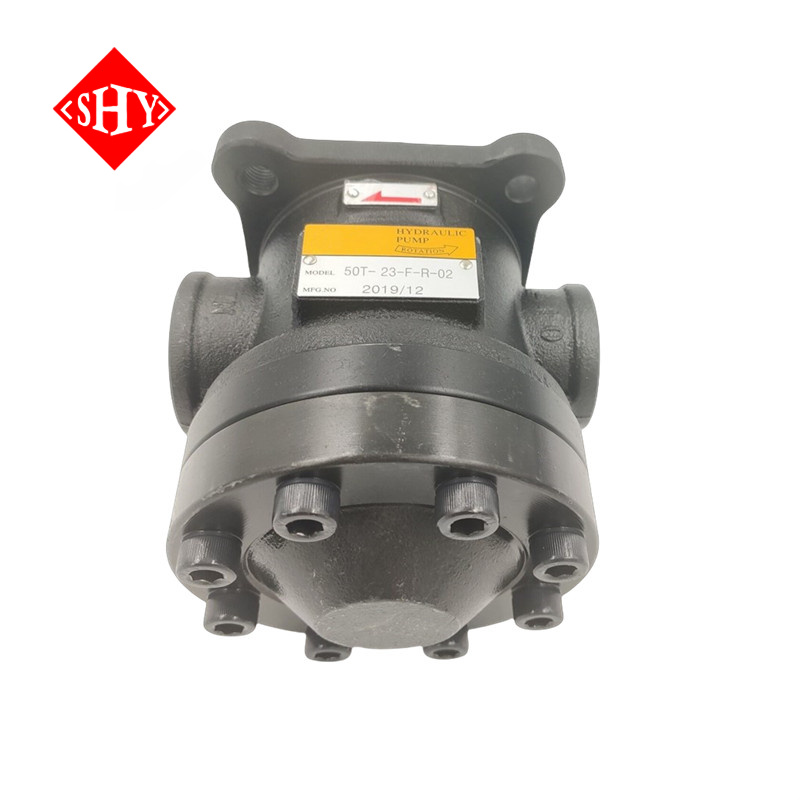
Technical specifications for units like the 50T/150T/250F fixed-displacement vane pump configurations reveal an excellent cost-to-performance ratio. These units are highly modular. When internal wear occurs, maintenance teams swap out a pre-assembled cartridge kit without removing the main housing from the electric motor. This drastically reduces maintenance downtime and repair expenses compared to rebuilding a complex piston unit. You unbolt the back cover, slide the old cartridge out, slide the new one in, and torque the bolts back down.
Their exceptionally quiet operation and ease of maintenance contrast against certain performance ceilings. Vane designs operate at much lower decibel levels than gear designs, making them perfect for indoor factory floors. They are fixed-displacement devices, meaning they cannot dynamically adjust flow like a piston model. They also have lower maximum pressure thresholds compared to axial piston models, limiting their use in ultra-high-pressure applications.
Pump Technology | Relative Cost | Max Pressure Capacity | Contamination Tolerance | Noise Level | Primary Advantage |
|---|---|---|---|---|---|
External Gear | Low | Low to Medium | High | High | Rugged durability in harsh environments |
Fixed Vane | Medium | Medium | Medium | Low | Quiet operation and easy cartridge replacement |
Variable Piston | High | Very High | Low | Medium | Dynamic flow control and maximum energy efficiency |
Remanufactured or aftermarket pricing structures frequently rely on core exchange programs. When you purchase a replacement unit, the supplier applies a core charge. This financial deposit is refunded only when you return your broken, original unit. This system allows rebuilders to harvest usable cast iron housings and non-wear components for future remanufacturing cycles.
Carefully evaluate the vendor's core acceptance criteria before finalizing the purchase. Not all broken units qualify for a full refund. If your original housing is cracked, heavily scored, or modified, the supplier rejects the core. Normal internal wear is expected, but catastrophic structural failure voids the exchange value. Clarifying these criteria upfront prevents unexpected chargebacks that artificially inflate your final procurement expenses.
Ensure your maintenance team does not cannibalize the broken unit for spare parts before shipping it back. Missing shafts, stripped threads, or absent control valves result in partial or complete forfeiture of your core deposit. Document the condition of your outgoing core with photographs to resolve any future disputes with the vendor's inspection department.
Shipping heavy iron components introduces significant hidden expenses into the procurement process. Standard Less-Than-Truckload freight is economical but slow, often taking several days to cross the country. When a critical machine is down, standard freight is unacceptable. Compare standard shipping costs against Next-Day Air or dedicated hot-shot trucking fees for emergency breakdowns.
Expediting a 200-pound cast iron component via air freight easily doubles the total invoice. This reality makes domestic warehousing and localized inventory incredibly valuable. A supplier offering a slightly higher base price but holding inventory two hours away is vastly more economical during an emergency than a cheaper supplier requiring overseas ocean freight.
Scrutinize the quote for crating fees, lift-gate surcharges, and insurance costs. Heavy industrial components require specialized wooden crating to prevent shaft damage during transit. If the vendor does not explicitly list these logistical fees, ask for a revised quote that includes all final delivery charges to your specific receiving dock.
The decision to specify a Vickers PVXS100 replacement hydraulic pump over waiting for a factory-new OEM unit comes down to supply chain realities. OEM lead times for specialized configurations stretch into months. For an active production facility, waiting 16 weeks for a factory-stamped unit is financially impossible. High-quality aftermarket replacements provide immediate availability, serving as the primary financial trigger for switching.
Compare standard warranty terms and core exchange discounts between OEM and aftermarket suppliers. Reputable aftermarket manufacturers offer warranties that match or exceed OEM standards, guaranteeing their units against material defects and workmanship. The financial impact of current supply chain lead times makes the aftermarket route highly viable for keeping legacy machinery operational.
Modern aftermarket manufacturing relies heavily on precise reverse-engineering. These are not merely copied parts. They are newly cast units machined to exact OEM tolerances using modern CNC equipment. Remanufactured units offer another viable path, utilizing original housings fitted with brand-new rotating groups, bearings, and seals to restore factory performance levels.
Trusting an aftermarket supplier requires strict verification of material specifications. Ensure the replacement unit utilizes the correct metallurgy. Verify whether the housing is cast iron or aluminum, as this dictates pressure handling and heat dissipation. Inquire about the quality of the internal bearings and the specific seal compounds used. Standard Buna-N seals fail if your system runs high-temperature synthetic fluids requiring Viton.
Request documentation on machining tolerances and internal clearances.
Verify the exact grade of cast iron or steel used in the cylinder block and valve plate.
Ensure the shaft spline hardness matches the OEM specification to prevent premature shearing under heavy torque loads.
Confirm the supplier uses premium, recognized bearing brands within the assembly.
Ask for material safety data sheets on the internal seal kits to guarantee fluid compatibility.
Never authorize a purchase without demanding factory acceptance testing documentation. Reputable suppliers provide a volumetric efficiency test report generated on a fluid test bench. This report proves the unit achieves the required flow rate at its maximum rated pressure before it ever leaves their facility. If a vendor refuses to provide bench-testing data, find another supplier immediately.
Physical mismatch risks cause severe installation delays. Verify mounting flange standards, ensuring you know whether your system requires an SAE 2-bolt, SAE 4-bolt, or a specific ISO metric flange. Shaft types vary wildly. Installing a keyed shaft into a coupling designed for a splined shaft halts your installation immediately. Port configurations must match, requiring you to verify whether the inlet and outlet use SAE split flanges, threaded O-ring bosses, or BSPP threads.
Check the physical envelope of the installation space. Aftermarket units or upgraded configurations feature slightly different control manifold placements or longer overall housing dimensions. Ensure the new unit physically fits within the existing framework without interfering with adjacent piping, structural steel, or safety guards. A unit that rubs against a steel frame will vibrate itself to death within a week.
The most significant hidden expense in fluid power maintenance is upgrading system filtration. Modern, tight-tolerance components require stringent ISO cleanliness codes. If you install a brand-new variable piston unit into a system with heavily contaminated oil, the microscopic debris destroys the brass valve plate within hours. Budget for high-efficiency glass-media filters and complete system flushes when upgrading your components.
Cavitation and aeration risks destroy more equipment than manufacturing defects. Cavitation occurs when the unit cannot draw enough fluid, creating vacuum voids that implode violently against internal metal surfaces. This sounds like marbles rattling inside the housing. Audit inlet line sizing, ensure the reservoir breather is unclogged, and verify that suction strainers are correctly sized and clean prior to commissioning.
Proper commissioning procedures are non-negotiable for warranty compliance and operational safety. Pre-fill the case with clean fluid before jogging the electric motor. Failing to fill the case results in a dry start, destroying internal bearings instantly. Bleed trapped air from the load-sensing lines and verify the electric motor's rotation direction matches the directional arrow on the housing. Running a unidirectional unit backward causes catastrophic internal failure within seconds.
Successful industrial procurement requires looking far beyond the initial vendor invoice. Prioritizing exact application matching, rigorous fluid cleanliness, and verifiable bench-testing data ensures your equipment runs reliably for years. Understanding the mechanical trade-offs between different displacement technologies and scrutinizing quotes for hidden logistical fees protects your facility from devastating unplanned downtime.
Request comprehensive technical datasheets and volumetric efficiency test reports from your shortlisted vendors before issuing a purchase order.
Audit your existing system's filtration setup and upgrade to finer micron elements to meet the cleanliness requirements of your new equipment.
Verify all mechanical integration points, including shaft splines, mounting flanges, and port threads, against the physical dimensions of the prime mover.
Document the condition of your existing core with photographs to ensure a smooth exchange process and secure your financial deposit.
Consult with a fluid power specialist to review your machine's duty cycle and confirm that the selected control type matches your operational demands.
A: Costs vary drastically based on displacement technology, control complexity, and brand. Gear designs represent the most economical baseline. Fixed-displacement vane units occupy a mid-tier budget range. Variable displacement piston units require a premium capital investment due to their complex internal swashplates and advanced pressure-compensating controls. Exact figures depend heavily on required flow rates and pressure ratings.
A: A core charge is a financial deposit applied to remanufactured or aftermarket units. It encourages you to return your broken original unit so the supplier can rebuild it. If your returned core has catastrophic damage, such as a cracked cast-iron housing or missing internal components, the vendor rejects it, resulting in a forfeited deposit.
A: Lifespan is measured in thousands of operational hours and is entirely contingent on maintenance. If you maintain strict ISO fluid cleanliness codes, keep operating temperatures within specified limits, and avoid exceeding the unit's designed duty cycle, a high-quality piston unit operates reliably for many years before requiring a major overhaul.
A: Yes, utilizing an aftermarket replacement is highly viable and often necessary due to supply chain lead times. Safety and reliability depend on the supplier. You must ensure the vendor provides comprehensive bench-testing data, matches OEM volumetric efficiency standards, and utilizes exact OEM material specifications for housings, bearings, and seals.
A: Manufacturing defects are rare. The leading culprits of premature failure are fluid contamination scoring internal surfaces, cavitation caused by restricted inlet lines, aeration from system leaks, dry starts during improper commissioning, and running the equipment beyond its maximum rated pressure thresholds.
A: Base your decision on system requirements. If your application demands dynamic flow control, maximum energy efficiency, and ultra-high pressure, a variable piston unit is required. If your application operates at mid-range pressures, prioritizes exceptionally low noise levels, and has strict budget constraints, a fixed-displacement vane unit is the better choice.
A: Maintaining this series requires strict adherence to fluid cleanliness protocols using high-efficiency filtration. You must periodically monitor case drain flow rates to check for internal wear. Routine checks and adjustments of the pressure compensator and load-sensing control valves are necessary to ensure the swashplate destrokes accurately under load.


