


Views: 0 Author: Site Editor Publish Time: 2026-10-19 Origin: Site


How long does a high speed hydraulic motor last? Its lifespan depends on operating pressure, oil quality, temperature, and maintenance. Poor conditions can accelerate wear and cause premature failure. This guide explores key lifespan factors, common failure signs, and practical maintenance methods to extend motor service life.
A high speed hydraulic motor does not have a fixed lifespan. Its actual service life depends on operating conditions and internal design. Manufacturers may provide durability data under specific test conditions.
For industrial buyers, operating hours offer a useful reference. However, they cannot predict the exact replacement date. Understanding different operating conditions helps estimate motor reliability more accurately.
Hydraulic motor service life is commonly measured in operating hours. However, no single operating-hour estimate applies to every motor design.
Manufacturers distinguish three important service-life concepts.
Service Life Type | Meaning | Practical Importance |
|---|---|---|
Design Life | Expected durability under specified conditions | Helps evaluate motor suitability |
Actual Service Life | Operating time before unacceptable performance loss | Reflects real operating conditions |
Maintenance Interval | Recommended period between inspections or servicing | Supports preventive maintenance |
A properly maintained motor may operate reliably for many years. However, contamination and excessive loading can shorten its operating life.
For example, the Parker Denison M5B series includes fixed-displacement hydraulic motors. Its M5BF-045-2N00-B102 model is described for heavy-duty industrial applications. The product description highlights stable output and continuous working performance. These characteristics support its suitability for demanding hydraulic systems.
Nevertheless, buyers should request verified durability data for their specific configuration.
Note: A hydraulic motor warranty does not represent its expected mechanical service life.
Continuous high-speed operation increases the frequency of internal mechanical movement. Bearings, shafts, and rotating components experience repeated loading cycles.
Higher speeds may also increase friction and heat generation. These conditions place greater demands on lubrication and cooling systems.
However, high rotational speed does not automatically reduce motor lifespan. A properly designed motor can operate reliably within its rated speed range.
For example, the AZMB, AZMF, AZMN, and AZMG external gear motor series offers a broad operating speed range. Their product descriptions also highlight sliding bearings designed for high loading. These features help accommodate different hydraulic drive requirements.
Actual durability still depends on the selected model and working conditions.
Hydraulic pressure directly influences motor output torque. Higher pressure differences generally produce greater torque. However, they also increase internal mechanical stress.
Continuous operation near maximum pressure may accelerate component wear. Frequent pressure spikes can damage seals and bearing surfaces.
Consider the AZMB and AZMF external gear motor series. Their published pressure ratings differ by product configuration.
Motor Series | Listed Continuous Pressure Limit | Listed Higher Pressure Rating |
|---|---|---|
AZMB | Up to 220 bar | Intermittent pressure up to 250 bar |
AZMF | Up to 250 bar | Maximum startup pressure up to 280 bar |
AZMN | Up to 250 bar | Maximum startup pressure up to 280 bar |
AZMG | Up to 250 bar | Maximum startup pressure up to 280 bar |
These values come from the supplier's series overview. Exact limits depend on individual model configurations. The higher ratings must not be treated as continuous operating limits.
Operating pressure should remain within the selected motor's permitted range.
Manufacturers specify performance under defined operating conditions. However, industrial machinery often experiences changing loads and temperatures.
Continuous-duty applications require stable cooling and lubrication. Intermittent applications may include periods of reduced load or stopped operation.
The M5B series, for example, targets industrial hydraulic systems and heavy machinery. These applications may involve different duty cycles and loading patterns.
Engineers should compare actual conditions against the motor's technical documentation. This prevents incorrect assumptions about expected service life.
A hydraulic motor may gradually lose efficiency before complete failure. Warning signs often appear during normal operation.
Common indicators include reduced torque, unstable speed, and abnormal vibration. Increased leakage may also indicate internal wear.
However, these symptoms do not always require immediate replacement. Restricted filters or insufficient supply flow can produce similar problems.
Technicians should inspect the complete hydraulic system before making decisions.
Tip: Record motor speed, operating pressure, and temperature during normal production. These measurements provide useful references for future condition assessments.
Several mechanical and environmental factors influence hydraulic motor durability. They often interact during continuous operation.
Understanding these factors helps reduce premature hydraulic motor failure. It also supports more effective maintenance planning.
Hydraulic oil transfers energy and lubricates internal motor components. Clean oil protects bearings, gears, pistons, and other precision surfaces.
Contamination introduces abrasive particles into the hydraulic circuit. These particles can damage internal surfaces and increase leakage.
Water contamination creates additional problems. It can encourage corrosion and reduce lubrication performance.
Oil cleanliness should follow the motor manufacturer's requirements. ISO 4406 provides a standardized system for reporting particle contamination.
Proper filtration helps protect high speed hydraulic motor components. It also supports consistent performance under demanding conditions.
Hydraulic oil temperature influences viscosity and lubrication performance. Excessive heat may reduce the oil's protective film thickness.
High temperatures can also accelerate seal aging. They may increase internal leakage and reduce efficiency.
Insufficient cooling can cause persistent temperature problems. Operators should regularly inspect heat exchangers and cooling circuits.
The AZMB, AZMF, AZMN, and AZMG series lists a broad viscosity and temperature operating range among its design characteristics. Nevertheless, the permitted limits vary by configuration.
Always use the selected motor's actual technical specifications.
Bearings support the motor shaft during rotation. They also help maintain correct internal component alignment.
Excessive radial loading may accelerate bearing fatigue. Axial loading can create additional stress on supporting surfaces.
Improper shaft alignment can cause vibration and premature wear. Incorrect couplings may also transfer unwanted loads into the motor.
The M5BF-045-2N00-B102 hydraulic motor is presented as a heavy-duty industrial model. However, its bearing and shaft limits still require verification before installation.
Correct alignment supports stable operation and longer component life.
Lubrication separates moving surfaces and reduces friction. Insufficient lubrication can lead to rapid surface wear.
Internal leakage develops when hydraulic oil bypasses working chambers. Some leakage is normal in hydraulic motor designs.
However, excessive leakage reduces volumetric efficiency. It may also increase temperature and reduce output performance.
Maintenance teams should monitor leakage changes during regular inspections. Measurements should follow manufacturer-specific testing procedures.
Note: Operating speed, oil viscosity, bearing loads, and internal leakage collectively influence hydraulic motor lifespan.
Hydraulic motors often show warning signs before complete failure. Recognizing these symptoms can prevent unexpected production interruptions.
Reduced torque is a common indicator of declining hydraulic motor performance. The motor may struggle to maintain its normal working speed.
Internal leakage can reduce available output torque. Insufficient hydraulic flow may also cause similar symptoms.
The M5B series is designed to provide stable torque output. However, actual performance depends on correct supply pressure and flow.
Technicians should measure the motor's actual speed under consistent loads. They should also verify hydraulic system pressure.
Unusual noise may indicate bearing damage or mechanical misalignment. Excessive vibration can also result from rotating component wear.
Cavitation and aeration may create additional operating noise. These conditions can damage internal surfaces if left unresolved.
Regular vibration monitoring helps identify developing mechanical problems. Operators should investigate sudden changes rather than relying on visual inspections.
External oil leakage often appears around shaft seals and connections. It may indicate damaged sealing components or excessive pressure.
Internal leakage is harder to identify directly. It may cause reduced torque and increased operating temperature.
Excessive heat can also result from overloaded equipment. Poor cooling and incorrect oil viscosity may contribute.
Warning Sign | Possible Cause | Recommended Action |
|---|---|---|
Reduced torque | Internal leakage or insufficient pressure | Check pressure and motor efficiency |
Unstable speed | Inconsistent flow or excessive load | Inspect the hydraulic circuit |
Abnormal noise | Bearing wear or cavitation | Inspect bearings and inlet conditions |
Excessive vibration | Shaft misalignment or component damage | Check mounting and alignment |
Oil leakage | Damaged seals or excessive pressure | Inspect seals and case pressure |
Overheating | Poor cooling or excessive friction | Check oil condition and cooling |
Tip: Monitor several symptoms together before diagnosing motor failure. Similar warning signs can originate from different hydraulic system components.
Different hydraulic motor designs have different wear characteristics. Their operating speed ranges and torque capabilities also vary.
Selecting the correct motor type helps maintain reliable performance. It also reduces unnecessary mechanical stress.
External gear motors use meshing gears to generate rotational motion. They generally have compact designs and relatively simple internal structures.
Their service life depends on gear accuracy and bearing conditions. Oil cleanliness and operating pressure also influence wear.
The AZMB AZMF AZMN AZMG Hydraulic High Performance External Gear Motor series provides several configurations for industrial hydraulic applications.
Its listed features include a broad speed range and high-load sliding bearings. The series also offers different shaft and connection arrangements.
Buyers should verify the permissible speed for each selected model.
Vane motors use sliding vanes inside a rotating assembly. Hydraulic pressure creates torque through their working chambers.
Continuous operation requires effective lubrication and internal sealing. Worn vanes may increase leakage and reduce efficiency.
The Parker Denison M5B Series Hydraulic Motor includes the M5BF-045-2N00-B102 configuration.
The supplier describes this fixed-displacement motor as suitable for demanding industrial applications. Its listed characteristics include stable torque and low operating noise.
Proper oil cleanliness helps protect its internal components. Buyers should confirm the precise model's speed and pressure ratings.
Axial piston motors use pistons arranged within a rotating cylinder assembly. Hydraulic pressure acts on the pistons to generate torque.
These motors contain precision-machined components. Their performance depends on correct lubrication and internal clearances.
Contaminated oil can damage pistons and valve plates. Excessive loading may also increase bearing stress.
Axial piston motors can suit demanding high-speed applications. However, their service life depends on the selected design and duty cycle.
High-speed and low-speed hydraulic motors serve different operating requirements. Speed alone does not determine their durability.
Feature | High Speed Hydraulic Motor | Low Speed Hydraulic Motor |
|---|---|---|
Operating speed | Higher rotational speed | Lower rotational speed |
Typical designs | Gear, vane, axial piston | Orbital, radial piston |
Torque characteristics | Depends on displacement and pressure | Often designed for high torque |
Common applications | Industrial rotating drives | Wheel drives and heavy equipment |
Maintenance focus | Bearings, lubrication, temperature | Load, pressure, seals, bearings |
For example, the TG Orbital Hydraulic Cycloid Motor offers multiple displacement and mounting configurations.
Its listed models include TG0140, TG0170, TG0240, and TG0405. The series also provides different shaft and port arrangements.
This orbital design provides an alternative for applications requiring different torque and speed characteristics. It should not automatically be classified as a high-speed motor.
Note: Gear, vane, piston, and orbital motors require different operating considerations. Compare their rated specifications before evaluating expected service life.
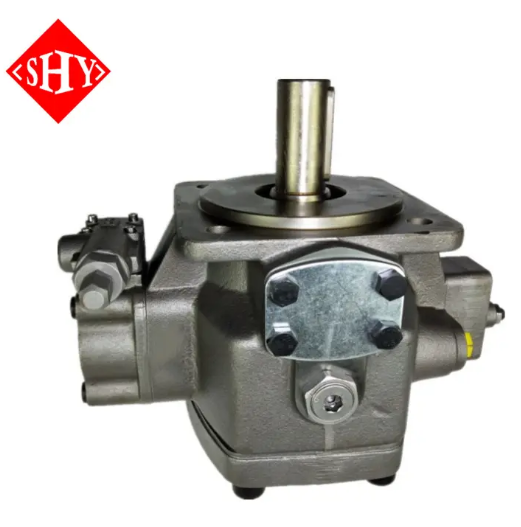
Preventive maintenance helps reduce unexpected hydraulic motor failures. It also improves reliability during continuous industrial operation.
Hydraulic oil cleanliness directly affects internal component wear. Contaminants can damage bearings and precision-machined surfaces.
Use suitable filtration equipment throughout the hydraulic circuit. Inspect filters regularly and replace damaged elements.
Keep oil containers and maintenance equipment clean. Prevent contaminants from entering open hydraulic connections.
Excessive speed and pressure can shorten hydraulic motor service life. Operators should monitor actual working conditions.
Check the motor's continuous pressure and maximum speed ratings. Avoid prolonged operation beyond recommended limits.
For example, AZMB-3X and AZMF series motors have different pressure specifications. Their permitted operating conditions should guide equipment selection.
Always confirm the exact displacement and configuration before installation.
Stable temperature helps maintain suitable hydraulic oil viscosity. It also protects seals and moving components.
Regularly inspect cooling lines and heat exchangers. Check for restricted flow or poor heat transfer.
Unexpected temperature increases require further inspection. They may indicate overloading, internal leakage, or lubrication problems.
A preventive maintenance schedule supports consistent motor performance. It also helps identify gradual deterioration.
Inspection Item | Recommended Action |
|---|---|
Hydraulic oil | Check viscosity and contamination |
Filters | Inspect condition and restrictions |
Bearings | Monitor noise and vibration |
Shaft seals | Check for external leakage |
Operating pressure | Compare against rated limits |
Motor speed | Record changes during operation |
Temperature | Monitor abnormal increases |
Inspection intervals should reflect actual operating conditions. High-duty equipment may require more frequent maintenance.
Tip: Record operating hours, temperature, and pressure during scheduled inspections. Consistent records help identify performance changes before serious failures occur.
Motor replacement should follow a complete condition assessment. Some performance problems result from external hydraulic system faults.
Start by measuring rotational speed under a known load. Compare actual measurements against the selected motor's specifications.
Check inlet and outlet pressures during operation. Confirm that the hydraulic system provides sufficient flow.
Output torque should remain consistent under comparable operating conditions. Unexpected changes may indicate internal wear.
Internal leakage measurements help identify declining motor efficiency. Case drain flow can provide useful information for applicable designs.
However, not every motor uses the same drainage arrangement. Measurement procedures must match the motor's internal construction.
Compare leakage readings against manufacturer limits. Avoid making replacement decisions from one measurement alone.
Repair may be practical when damage remains limited. Replacement may offer better value after extensive internal wear.
Buyers should consider component availability and expected downtime. They should also evaluate installation and maintenance expenses.
For example, replacing an M5BF-045-2N00-B102 requires careful compatibility checks. Shaft dimensions, displacement, mounting, and port arrangements must match the application.
The same principle applies to AZMB, AZMF, AZMN, and AZMG motors. Different configurations may not be directly interchangeable.
Tip: Request technical drawings and operating specifications before ordering replacement motors. Correct matching helps prevent installation problems and repeated failures.
A high speed hydraulic motor has no fixed lifespan. Its durability depends on operating pressure, speed, oil quality, and maintenance. Regular inspections help prevent premature failure and reduce downtime. Xiamen Senhengyuan Machinery Equipment Co., Ltd. supplies reliable hydraulic motors, including M5B, AZMB, AZMF, AZMN, AZMG, and TG series. Its quality inspections, technical support, and customized solutions help improve hydraulic system efficiency and reliability.
A: Service life varies by design, operating conditions, and maintenance quality.
A: Pressure, temperature, oil contamination, and bearing wear influence durability.
A: Maintain clean oil, control temperature, and follow regular maintenance schedules.
A: Excessive pressure, poor lubrication, and overheating accelerate internal wear.
A: Replace it when excessive leakage or mechanical damage makes repairs impractical.
A: Neither inherently lasts longer; design and operating conditions determine longevity.


