


Views: 0 Author: Site Editor Publish Time: 2026-07-28 Origin: Site


When a hydraulic system fails on the job site, production stops immediately. You cannot afford to let heavy machinery sit idle while operators wait for answers. Replacing a hydraulic oil pump is a time-sensitive, high-stakes operational decision that directly impacts project timelines and maintenance budgets. If you manage excavators, loaders, or industrial presses, understanding the full scope of replacement factors is mandatory for getting equipment back online.
You must differentiate between light automotive engine oil pumps and heavy industrial or mobile machinery hydraulic pumps. Automotive pumps handle low-viscosity fluids at minimal pressures. Industrial hydraulic pumps generate massive force, operating at extreme pressures to move tons of material. This fundamental difference in engineering sets the baseline for your expectations when dealing with heavy-duty equipment failures.
Maintenance managers constantly struggle to forecast accurate replacement requirements. The wide variance between OEM availability, aftermarket alternatives, labor requirements, and hidden downtime expenses complicates the decision-making process. This guide provides a comprehensive, evidence-based framework for evaluating repair versus replacement, calculating operational impact, and selecting the right sourcing strategy to restore your machinery's performance.
Total Cost Variance: Replacement costs range from a few hundred dollars for basic gear pumps to several thousand for complex, variable displacement piston pumps used in heavy machinery.
The 50% Rule: Industry standard dictates that if repair costs exceed 50-60% of the price of a new high-quality hydraulic pump, full replacement is the more economically viable choice.
Hidden Expenses: Labor is only a fraction of the cost; system flushing, fluid replacement, and operational downtime often exceed the capital expenditure of the pump itself.
Sourcing Strategy: Purchasing directly from a vetted hydraulic pump factory or certified distributor mitigates the risk of premature failure associated with unverified aftermarket components.
The upfront disparity between Original Equipment Manufacturer (OEM) pumps and aftermarket alternatives requires careful evaluation. OEM pumps command a premium because they guarantee exact specifications and carry the manufacturer's direct warranty. When you buy OEM, you are paying for the brand name, the established distribution network, and the assurance that the component will bolt directly onto your machine without modification. For frontline production equipment where failure is not an option, many fleet managers default to OEM parts.
Aftermarket options generally present a lower initial capital expenditure, making them attractive for tight maintenance budgets or older machinery nearing the end of its lifecycle. However, the risk-to-reward ratio of aftermarket parts demands scrutiny. You must ensure the alternative does not compromise longevity or lack adequate warranty coverage. Sourcing from a reputable hydraulic pump factory can provide a solid balance, offering components that meet or exceed OEM standards without the inflated brand markup.
Realistic expectations vary widely based on pump displacement and pressure ratings. High-pressure variable displacement units require intricate machining and hardened internal components, making them substantially more resource-intensive to manufacture than standard fixed displacement models. Below is a comparison of sourcing strategies:
Sourcing Strategy | Initial Expenditure | Lead Time | Warranty & Support | Best Application |
|---|---|---|---|---|
OEM Direct | Highest | Variable (Subject to dealer stock) | Comprehensive factory warranty | New machinery under warranty, critical frontline assets |
Verified Aftermarket Factory | Moderate | Generally fast (Direct shipping) | Standard warranty, direct technical support | Mid-lifecycle equipment, large fleet maintenance |
Unbranded Replicas | Lowest | Fast (Online retailers) | Minimal to none | Not recommended for heavy industrial use |
Labor requirements for a hydraulic pump installation fluctuate heavily based on machine accessibility and system complexity. Certified hydraulic technicians possess specialized diagnostic skills and require heavy-duty tooling. Replacing a pump buried deep within an excavator's chassis, surrounded by rigid steel lines and structural counterweights, will naturally incur higher labor hours than replacing an easily accessible externally mounted unit on a stationary industrial press.
Many equipment owners face the "Bring-Your-Own-Pump" dilemma. Sourcing your own unit from a manufacturer might save on the hardware side, but repair shops often apply a labor markup or refuse to warranty the installation of customer-supplied parts. Shops rely on parts margins to maintain their operations, and they cannot guarantee the internal cleanliness or quality of a pump they did not source. Analyzing these trade-offs is essential before ordering parts independently.
Typical labor hour ranges for standard replacements span from a half-day to multiple days, depending entirely on the specific machine and the surrounding hydraulic circuit complexity. Field service calls add travel time and mileage to the equation, further increasing the labor investment compared to bringing the machine into a dedicated shop environment.
Labor also encompasses the vital preparatory and cleanup work required during installation. Machine accessibility dictates how long it takes to safely drain the reservoir and prepare the system. A major component of this process is the mandatory system flushing, which is often overlooked by inexperienced technicians.
Flushing is required to remove metal shavings, degraded seal material, and contaminants left behind by the previous pump failure. If you skip this step, residual debris will circulate and quickly destroy the new pump. Consequently, replacing the hydraulic fluid and all system filters is non-negotiable. The investment in premium hydraulic fluid and heavy-duty filtration elements must be factored into the total replacement scope to protect your new hardware.
Drain the main hydraulic reservoir completely and inspect the bottom for heavy metal sludge.
Remove and inspect all suction strainers and return filters for brass or steel flakes.
Flush all related hydraulic lines and actuators using a dedicated filtration cart.
Install the new pump and fill the reservoir with fresh, filtered hydraulic fluid.
Run the system at low idle, bypassing actuators if possible, to cycle fluid through new filters.
The physical components and labor are only part of the equation. Calculating lost revenue per hour of machine downtime often reveals that the operational loss dwarfs the repair bill. If a critical piece of mobile machinery is down, project delays, idle crew wages, and potential contract penalties accumulate rapidly. A broken excavator halts the dump trucks, which halts the grading crew, creating a massive bottleneck.
Expedited shipping for heavy components also factors into the total replacement scope. When every hour of downtime impacts the bottom line, paying a premium for overnight freight to secure a replacement unit becomes a necessary operational expense rather than an optional luxury. Fleet managers must weigh the cost of expedited shipping against the daily revenue generated by the machine.
Not every failure requires a complete replacement. Scenarios where replacing seals, O-rings, or individual bearings is sufficient usually involve minor external leaks or bearing wear without catastrophic internal scoring. If the main housing, valve plates, and internal rotating groups are intact, a rebuild might be a viable and efficient solution.
Industry benchmarks for repair components help guide maintenance decisions. Seal kits, gaskets, and O-rings represent a minor investment. Individual bearings require slightly more resources. If internal damage is present but limited, new cylinder blocks or pistons can be sourced. The crucial calculation is determining the tipping point where the extensive labor hours required for a custom teardown, inspection, machining, and reassembly eclipse the efficiency of installing a factory-new unit.
Component Condition | Recommended Action | Labor Intensity |
|---|---|---|
External shaft seal leaking, no abnormal noise | Replace seal kit only | Low to Moderate |
Worn bearings, slight vibration, clean fluid | Rebuild with new bearings and seals | High (Requires full teardown) |
Scored valve plate, moderate efficiency loss | Lapping/Machining or replace rotating group | Very High |
Cracked housing, shattered pistons, metal in fluid | Complete Pump Replacement | Moderate (Swap and flush) |
Complete replacement becomes mandatory when physical indicators point to catastrophic failure. Severe housing cracks, shattered pistons, or heavy metal contamination found in the hydraulic fluid indicate that the internal components have disintegrated. In these cases, a rebuild is impossible, highly unreliable, and poses a massive risk to the rest of the hydraulic circuit.
The lifecycle stage of the machinery also influences this decision. If the equipment is nearing the end of its operational life and slated for auction, a temporary fix or a used pump might suffice. However, for frontline production machinery expected to perform daily, investing in a brand-new pump ensures reliability and prevents recurring failures that drain maintenance resources and frustrate operators.
The replacement economics differ vastly between pump types. Fixed-displacement gear and vane pumps are generally lower in complexity and easier to replace. They have fewer moving parts, rely on simple meshing gears or sliding vanes, and are suitable for lower-pressure applications like steering circuits or auxiliary functions. Their straightforward design makes them relatively quick to swap out in the field.
In contrast, replacing a piston pump requires a higher initial investment and greater technical expertise. Piston pumps offer superior volumetric efficiency and the extreme high-pressure capabilities required for heavy equipment implements and complex mobile hydrostatic drives. The intricate internal design of variable-displacement piston pumps justifies their position as premium components, as they provide precise control over fluid flow and system pressure based on load demands.
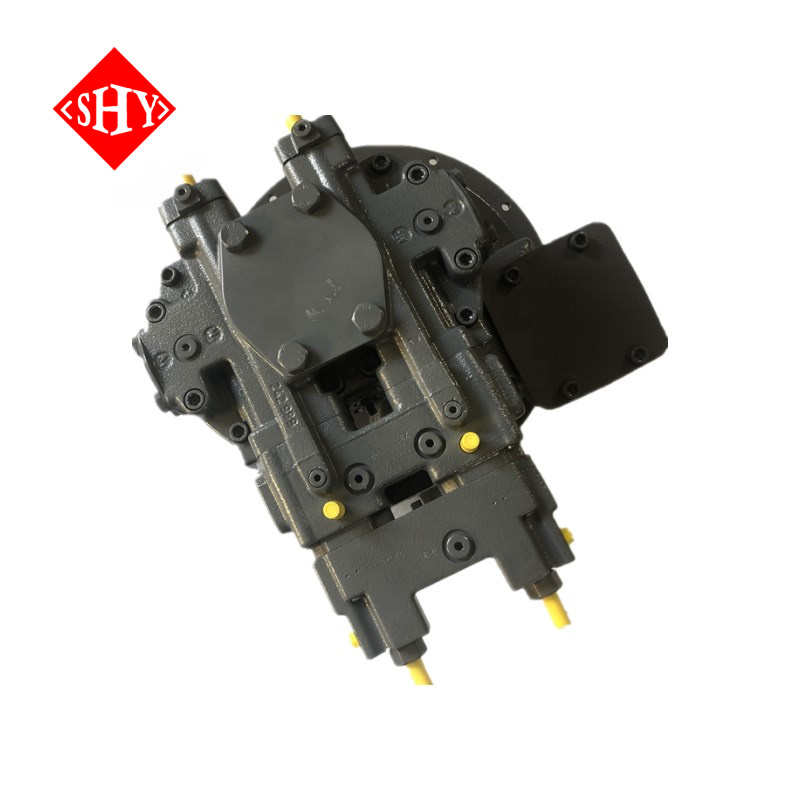
The replacement landscape for the widely used A8V series double piston pumps highlights how displacement size impacts the overall scope of work. These pumps are commonly found in heavy excavators, cranes, and demanding mobile hydraulic applications. The installation complexity, physical weight, and required resources scale directly with the pump's capacity.
For compact and mid-range applications, the A8V A8V28 A8V55 A8V58 A8V80 A8V107 A8V125 A8V160 A8V200 hydraulic oil pump options provide reliable power for standard earthmoving tasks. Heavy-duty models like the A8V107, A8V125, A8V160, and A8V200 handle massive flow requirements for large-scale mining and construction equipment. Sourcing these high-capacity models from an OEM brand carries a premium. Alternatively, purchasing from a verified factory specializing in precision aftermarket piston pumps can yield substantial operational efficiency while maintaining rigorous performance standards.
A high-quality hydraulic pump must survive high-pressure industrial environments, which demands strict metallurgical and machining tolerances. The internal components, such as valve plates, cylinder blocks, and swashplates, require hardened steel alloys and precise surface finishing to prevent internal leakage under heavy load. If the metallurgy is subpar, the pump will suffer from rapid wear, leading to internal bypassing and excessive heat generation.
Volumetric efficiency ratings and factory-tested performance curves are critical indicators of quality. A reputable manufacturer will provide documentation proving the pump meets specific flow and pressure benchmarks before it leaves the facility. This testing ensures the unit performs reliably in the field, delivering the exact flow rate required to operate your machinery's cylinders and motors at the correct speed.
Vetting a supplier involves checking for ISO certifications, rigorous testing protocols, and clear warranty terms. A reliable factory maintains strict quality control over every component, from the raw castings to the final assembly, reducing the risk of premature failure. They utilize advanced CNC machining centers and coordinate measuring machines to verify tolerances down to the micron.
Working with manufacturers who offer direct technical support and guaranteed parts availability streamlines the supply chain. This relationship ensures you receive the correct configuration, shaft spline, and mounting flange for your machinery. It also guarantees you have access to replacement parts, seal kits, or troubleshooting assistance when needed, rather than being left in the dark by a third-party reseller.
Residual system contamination is the leading cause of replacement pump failure. If metal debris from the previous failure remains in the lines, cylinders, or hydraulic motors, it will circulate directly into the new pump. This causes immediate scoring of the brass cylinder blocks and steel pistons, leading to catastrophic damage within hours of startup.
The mitigation strategy requires rigorous fluid analysis, the installation of magnetic filtration, and strict adherence to cleanliness standards during installation. Technicians must thoroughly flush all lines, manually clean the reservoir with lint-free rags, and verify fluid cleanliness before initiating the new pump. Assuming the system is clean without visual verification is a guaranteed path to a second failure.
Properly priming the pump is essential to prevent dry starts, which destroy internal bearings and seals instantly. The pump case must be filled with clean hydraulic fluid before the engine is ever cranked. Technicians must also set the correct pressure compensator, standby pressure, and flow controls using calibrated gauges before allowing the system to operate under full load.
A safe break-in period ensures the replacement pump integrates seamlessly with the existing hydraulic circuit. Gradually increasing system pressure and monitoring for abnormal noise, vibration, or temperature spikes confirms the installation was successful. Only after a thorough operational check at operating temperature should the machine be released back to the production crew.
Fill the pump case with clean hydraulic fluid through the highest case drain port.
Leave the pump discharge line slightly loose to bleed trapped air during initial cranking.
Crank the engine without starting (if possible) to build initial prime and lubrication.
Start the engine at low idle and monitor case drain flow and system pressure gauges.
Gradually cycle hydraulic functions without load to purge remaining air from the cylinders.
Adjust compensator and relief valve settings to factory specifications under operating temperature.
The true scope of a hydraulic pump replacement extends far beyond the physical component. It is a combination of hardware selection, specialized labor, mandatory fluid replacement, and the severe operational impact of mitigated downtime. Applying the 50% repair rule helps determine when a complete replacement is the most logical decision. Matching the specific pump type exactly to your machine's operational demands ensures long-term reliability and prevents recurring failures.
To move forward effectively, take these actionable steps:
Conduct a comprehensive fluid analysis to determine the exact extent of system contamination.
Assess the physical damage to your current pump housing and rotating group to rule out simple repairs.
Request itemized quotes from certified suppliers, comparing OEM and verified aftermarket options based on lead time and warranty.
Schedule the replacement during planned downtime if possible, securing all necessary filters, fluids, and specialized tooling in advance.
A: Automotive oil pumps circulate low-viscosity oil at low pressures for basic engine lubrication. Industrial hydraulic pumps operate at extreme pressures to transmit massive mechanical power in heavy machinery. They require robust materials, hardened steel components, and precision engineering to handle severe loads, resulting in a completely different scale of manufacturing and investment.
A: The total investment varies widely based on equipment size. You must account for the pump hardware, specialized technician labor, heavy-duty filtration elements, and bulk hydraulic fluid. Variable displacement piston pumps require a significantly higher capital expenditure than basic gear pumps, and field service labor will further increase the overall replacement scope.
A: With rigorous maintenance, proper fluid filtration, and strict adherence to operating limits, a high-quality industrial hydraulic pump can last between 10,000 and 20,000 operating hours. Neglecting fluid changes, allowing cavitation, or operating beyond rated pressures will drastically reduce this lifespan, often causing premature failure within a few thousand hours.
A: Common warning signs include increased cavitation noise resembling a whining or growling sound, sluggish hydraulic actuator operation, erratic system pressure fluctuations, and rapid spikes in operating fluid temperature. You may also notice external shaft seal leaks or a significant drop in machine cycle times under heavy load.
A: No. Piston pumps and gear pumps operate at entirely different pressure ranges and volumetric efficiencies. Swapping them without a complete system redesign will result in severe performance loss, massive overheating, and immediate component failure. Your machinery's hydraulic circuit is engineered specifically for the flow characteristics of the original pump type.
A: When a pump fails, it often sheds microscopic metal debris and degraded seal material into the hydraulic fluid. If the system is not thoroughly flushed, this residual debris will circulate directly into the new pump, causing immediate scoring of internal components and leading to a rapid, catastrophic secondary failure.
A: Yes, if sourced correctly. Verified aftermarket manufacturers and specialized factories produce high-quality components that meet or exceed OEM specifications. However, you must avoid unbranded, low-quality replicas that lack testing certifications, proper metallurgy, and reliable warranties, as they cannot withstand industrial operating pressures.


