


Views: 0 Author: Site Editor Publish Time: 2025-12-16 Origin: Site


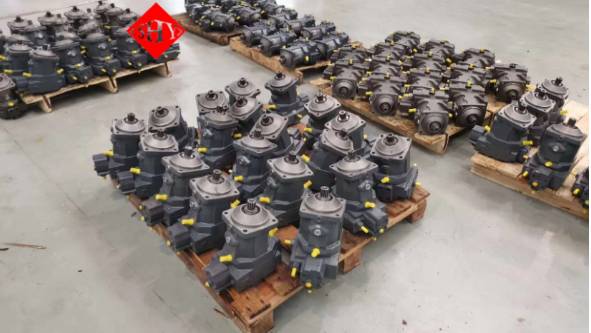
Selecting the right pump technology is rarely about finding a "better" machine in the abstract. It is about finding the specific fitness for your purpose. Choosing the incorrect pump type often leads to immediate issues like cavitation and efficiency loss, or long-term headaches like premature seal failure and inflated energy costs. Engineering decisions usually come down to two main contenders. Centrifugal pumps serve as the industry workhorse for high-volume, low-viscosity fluid transfer. Conversely, the Piston Pump acts as the specialist for high-pressure requirements, precision metering, and challenging viscosities.
This guide moves beyond basic dictionary definitions. We will compare critical flow curves, viscosity handling capabilities, and Total Cost of Ownership (TCO). You will explore specific industrial use cases, from standard water transfer to complex hydraulic high-pressure systems. By understanding the physics behind the performance, you can ensure your system operates with maximum reliability and minimal downtime.
The Core Split: Centrifugal pumps excel at versatility and volume; Piston pumps excel at precision and pressure handling.
Viscosity Threshold: Centrifugal efficiency drops rapidly above 100 cSt, whereas piston pump efficiency often improves with viscosity due to internal sealing.
Pressure Response: Centrifugal flow fluctuates with back-pressure changes; Piston pumps deliver constant flow regardless of system pressure (crucial for long discharge lines).
Maintenance Reality: Centrifugal pumps offer lower maintenance costs (OPEX), while piston pumps require disciplined maintenance of valves and seals but offer longer service life in abrasive/high-load conditions.
To make an informed purchase, you must understand the fundamental physics driving these units. The divergence begins at the core mechanism of fluid movement.
Centrifugal pumps operate on kinetic principles. They use a spinning impeller to create high rotational velocity. The pump casing then converts this velocity into pressure. Consequently, the flow rate is highly dependent on the resistance it meets. If you block the discharge, the flow stops, and the impeller spins effectively in place (churning the fluid).
Piston pumps operate on the principle of Positive Displacement (PD). They do not rely on momentum. Instead, they trap a fixed volume of fluid inside a chamber and mechanically force it out through a check valve. If the discharge is blocked, a piston pump will build pressure until something breaks or a relief valve opens. It does not "slip" or idle like a centrifugal unit.
A notable evolution in this technology is the Piston double pump. While standard single-piston designs can suffer from pulsation (a gap in flow during the intake stroke), a double pump utilizes opposing pistons. As one piston creates suction, the other drives discharge.
This creates a significantly smoother flow profile compared to single-acting versions. It also doubles the volumetric output without drastically increasing the footprint. In contrast, increasing the output of a centrifugal pump usually requires a larger impeller or higher RPM, which alters the energy curve entirely.
The choice between kinetic and positive displacement impacts your system stability:
Variable Pressure: If your system pressure varies (e.g., filter presses clogging up or changing elevation), a centrifugal pump’s flow will fluctuate and become unstable.
Rigid Flow Needs: A piston pump provides a rigid, predictable flow curve regardless of pressure variance. You get the same gallons per minute (GPM) at 50 PSI as you do at 500 PSI.
Marketing brochures often obscure the technical limitations of a pump. We need to look at the performance curves to see the real story.
The most distinct difference lies in the performance curve. A centrifugal pump features a sloping curve. As the head (pressure) increases, the flow rate decreases. This is known as "slippage" in performance. If you are pumping water through a short hose, you get maximum flow. If you extend that hose to 300 feet, the added back-pressure will drastically reduce the output.
The piston pump offers a "vertical" performance curve. Because it physically displaces a set volume per stroke, the flow remains constant even if discharge pressure spikes. In agricultural spraying or long-distance transfer, this is critical. A piston pump delivers the exact same dosage whether it is pushing through 50 feet or 300 feet of line, ensuring consistent application rates.
Fluid thickness is often the silent killer of pump efficiency. Centrifugal pumps have a hard "viscosity wall." Industry data indicates that performance degradation begins at roughly 100 cSt (centistokes). Above this threshold, the friction on the impeller causes drastic efficiency losses. The motor works harder to spin the impeller, but less fluid moves. By the time you reach 850 cSt, a standard centrifugal pump is essentially useless.
Piston pumps exhibit counter-intuitive physics here. As viscosity rises, their volumetric efficiency often improves. Thicker fluids seal the internal clearances between the piston and the cylinder wall more effectively than thin fluids. This reduces internal slip (blow-by). For heavy oils, syrups, or polymers, positive displacement is the only viable path.
| Feature | Centrifugal Pump | Piston Pump |
|---|---|---|
| Flow Curve | Variable (Drops as pressure rises) | Constant (Rigid regardless of pressure) |
| Viscosity Limit | Efficient < 100 cSt | Efficient > 100 cSt (Handles high viscosity) |
| Shear Action | High Shear (Damages sensitive fluids) | Low Shear (Gentle on fluids) |
| Self-Priming | No (Usually requires flooded suction) | Yes (Creates strong vacuum) |
Beyond efficiency, you must consider the fluid's integrity. Centrifugal impellers create high shear forces due to high rotational speeds. This can destroy shear-sensitive media like flocculants, dairy products, or long-chain polymers. Piston pumps operate at lower cycle speeds and move fluid in "chunks" rather than blending it, making them the "gentle" option for delicate media.
Specs on a sheet are one thing; real-world application is another. Here is how these technologies divide the industrial landscape.
When the application demands pressure exceeding 1,000 PSI, the centrifugal pump retires. This is the domain of the Hydraulic high pressure piston pump. These units are essential in heavy machinery, car wash systems, and reverse osmosis plants where overcoming osmotic pressure is mandatory.
Precision is another factor. In chemical injection or fertigation, you cannot afford a 10% variance in flow. For OEM medical applications or laboratory settings, engineers often deploy a Micro piston pump. These miniature units provide drop-by-drop accuracy that kinetic pumps simply cannot achieve.
If the goal is moving massive amounts of water cheaply, the centrifugal pump is undefeated. Applications include municipal water supply, flood dewatering, and HVAC cooling loops. In these scenarios, the fluid is thin (water-like), and the priority is Gallons Per Minute (GPM), not PSI. The simplicity of the centrifugal design allows for massive flow rates with relatively compact motors.
Some industrial circuits require the pump to alternate between high flow/low pressure and low flow/high pressure without stopping the motor. This is where the Hydraulic variable piston pump shines.
Unlike a fixed centrifugal pump that would require a Variable Frequency Drive (VFD) to change output, a variable piston pump can mechanically adjust its internal swashplate angle. This allows the pump to "idle" or change displacement on the fly. It reduces heat generation and energy consumption significantly during non-peak cycles.
Buying the pump is just the entry fee. The Total Cost of Ownership (TCO) includes energy, maintenance, and downtime.
Centrifugal pumps generally win on CAPEX (Capital Expenditure). They are simpler to cast and assemble. Piston pumps have higher CAPEX due to precision machining requirements for cylinders, pistons, and crankshafts. However, in high-pressure or high-viscosity applications, the piston pump offers massive energy savings. A centrifugal pump forcing viscous fluid wastes significant horsepower on friction; a piston pump uses that energy for movement.
Operational complexity varies significantly:
Centrifugal: These are "set and forget" machines for long periods. They have few moving parts. The main failure modes are usually mechanical seals or bearings, which are straightforward to replace.
Piston: These involve complex mechanics including check valves, crankshafts, and packings. They require disciplined maintenance schedules. A critical operational reality is "Winterization." Because a piston pump has a sealed chamber, water freezing inside can crack the manifold. They must be drained or filled with antifreeze in cold climates.
Suction lift is a frequent headache for operators. Piston pumps are naturally self-priming. The mechanical action of the piston retreating creates a vacuum, allowing them to pull fluid up from a reservoir located below the pump. Standard centrifugal pumps are not self-priming. If air enters the line (vapor lock), the impeller spins in air and pumping stops. They typically require a "flooded suction" where the fluid source is above the pump inlet.
One downside of the reciprocating action is pulsation. Each stroke creates a pressure spike. While a piston double pump mitigates this, sensitive downstream equipment may still require pulsation dampeners. Centrifugal pumps deliver a smooth, laminar flow, which is preferable for applications like filtration where a steady stream helps maintain the filter cake.
To finalize your decision, use this selection framework. Avoid the trap of asking for a "regular pump"—a vague term that leads to misquotes. Be specific about your constraints.
Choose Centrifugal if:
Fluid viscosity is under 100 cSt.
Flow rate requirements are high (High GPM).
Pressure requirements are low-to-moderate.
Flow needs to be perfectly smooth without dampeners.
Choose Piston if:
System pressure is high (>1000 PSI).
Flow must be precise, metered, or dosed.
Fluid is viscous, thick, or shear-sensitive.
Suction conditions are difficult (need self-priming).
The "Regular Pump" trap often occurs when replacing legacy equipment. Users assume a pump is a pump. However, replacing a piston pump with a centrifugal unit in a high-head application will result in zero flow. Conversely, putting a piston pump in a high-volume water transfer line creates unnecessary restriction and maintenance costs.
The battle between kinetic and positive displacement is not about superiority, but suitability. Centrifugal pumps remain the default choice for transport—moving thin fluids from A to B efficiently. Piston pumps are the default choice for work—generating the pressure required to actuate machinery, atomize sprays, or meter chemicals with exactness.
Before soliciting a quote, ensure you have calculated your exact viscosity at operating temperature and the Total Dynamic Head (TDH) of your system. These two numbers will dictate the technology you need. Whether you require a massive hydraulic high pressure piston pump for a press or a simple centrifugal unit for a cooling tower, data-driven selection ensures long-term profitability.
A: It depends on the application. For low-viscosity fluids (like water) at low pressures, centrifugal pumps are highly efficient. However, as viscosity or pressure increases, their efficiency drops rapidly. In high-pressure (>1000 PSI) or high-viscosity scenarios, piston pumps are significantly more mechanically and volumetrically efficient, often exceeding 85% efficiency where a centrifugal pump might drop below 40%.
A: Generally, no. Centrifugal performance degrades noticeably above 100 cSt. While specialized impeller designs exist, there is an absolute limit around 850 cSt where the pump ceases to function effectively. Pumping thick fluids with a centrifugal pump also consumes excessive energy due to friction losses.
A: Yes, this is mandatory. Because piston pumps are positive displacement devices, they will continue to build pressure if the discharge line is blocked. Without a relief valve to bypass the flow, the pump can burst pipes, blow seals, or destroy the motor. Centrifugal pumps do not have this risk as they simply churn the fluid at "shut-off head."
A: The main difference lies in the sealing mechanism. In a piston pump, the seal (cup or ring) is attached to the moving piston and moves with it. In a plunger pump, the seal is stationary in the pump housing, and a smooth cylindrical plunger moves through it. Plunger pumps typically handle higher pressures better than piston variants.


