


Views: 0 Author: Site Editor Publish Time: 2026-03-05 Origin: Site


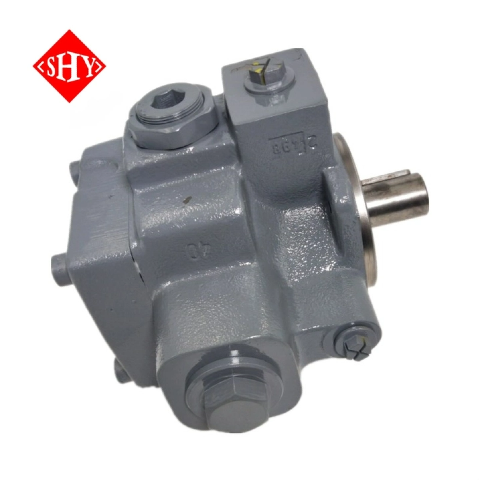
Hydraulic systems rarely operate under perfectly stable conditions. Load changes, cycle variation, and shifting speed requirements create constant demand fluctuations that fixed displacement pumps cannot always handle efficiently. This is why many industrial users turn to the 1PV2V4 V4 Series Hydraulic Pump when consistent control and energy efficiency become critical. Rather than delivering the same output continuously, the V4 series adapts to system needs, allowing machines to operate with greater stability, reduced heat generation, and improved long-term reliability across diverse applications.
Variable displacement describes a pump’s ability to modify its output volume without changing rotational speed. Instead of providing constant flow regardless of system demand, the pump automatically adjusts internal geometry to match required performance.
A useful way to visualize variable displacement is to imagine a pump that supplies exactly the amount of hydraulic energy required at each moment. When demand decreases, output reduces. When demand increases, output rises. This behavior helps prevent unnecessary pressure buildup and reduces reliance on relief valves.
By matching output to real demand, the pump supports smoother system behavior and improves overall efficiency.
Excess flow in a hydraulic system converts into heat when it is throttled or relieved. Heat accelerates oil degradation, reduces sealing effectiveness, and increases maintenance requirements. Variable displacement minimizes excess flow, which lowers energy loss and stabilizes operating temperature.
Reduced thermal stress contributes to longer component life and improved system reliability.
The V4 series achieves variable displacement by adjusting the position of the cam ring relative to rotating vanes. This internal movement changes chamber volume and therefore alters the amount of fluid delivered per rotation.
When pressure demand is low, the cam ring shifts to reduce chamber size, decreasing output. When demand increases, the cam ring moves to expand chamber volume, allowing greater flow. This mechanical adjustment enables the pump to respond automatically to system conditions.
Adaptive internal geometry allows consistent performance across varying loads.
Despite displacement variation, several requirements remain unchanged. Oil cleanliness remains critical to protect internal surfaces. Proper viscosity ensures smooth vane movement and stable sealing performance. Adequate inlet conditions prevent cavitation and support consistent output.
Maintaining fluid quality is essential for long-term reliability.
Variable vane pumps offer multiple control strategies that influence how output responds to operating conditions. Understanding these options helps users align pump behavior with system goals.
Pressure control enables the pump to maintain a defined pressure level even when load varies. As system pressure approaches the target value, displacement decreases automatically. This prevents excess flow and stabilizes energy consumption.
Pressure control supports applications where load fluctuates but pressure consistency is required.
Flow control stabilizes actuator speed by adjusting displacement according to movement requirements. Consistent speed improves cycle accuracy and reduces the need for operator adjustments. Flow stability is particularly important in automated production where timing precision influences productivity.
Stable flow enhances process consistency.
Many industrial machines require both pressure stability and speed consistency. Combined control allows the pump to respond to multiple performance targets simultaneously. This flexibility supports complex circuits where different stages of operation demand different hydraulic behavior.
Combined control improves adaptability.
Variable displacement technology provides value wherever load variation and efficiency matter.
Automation systems rely on consistent motion across repeated cycles. Machine tools require stable pressure during cutting operations while maintaining efficient idle behavior. Variable vane pumps support both requirements by adapting output to changing conditions.
These characteristics improve precision and reduce energy consumption.
Injection molding machines experience varying load across cycle stages. Forming equipment requires pressure stability during shaping. General hydraulic power units benefit from reduced heat during partial load operation. Variable displacement enables these systems to operate efficiently across diverse duty cycles.
Adaptive output improves performance consistency.
Misunderstanding variable pump behavior can limit performance even when the pump is correctly selected.
Cavitation occurs when inlet conditions do not provide sufficient fluid supply. Noise, foaming, and temperature increase often indicate cavitation risk. Ensuring proper suction design and maintaining fluid condition helps prevent this issue.
Stable inlet conditions support reliable operation.
Maximum pressure represents the upper capability limit rather than normal operating conditions. Designing systems around maximum pressure can lead to inefficient operation. Understanding working pressure ensures balanced performance.
Correct pressure planning improves efficiency.
Fluid viscosity influences vane movement and sealing performance. Operating outside recommended temperature ranges can reduce efficiency and accelerate wear. Monitoring oil condition supports stable performance across extended operation.
Fluid management is essential for reliability.
Buyer concern | Fixed displacement pump | V4 variable vane pump | What to measure on your machine |
Energy consumption | Higher under partial load | Reduced through adaptive output | Duty cycle pattern |
Heat generation | Greater thermal buildup | Lower operating temperature | Oil temperature trend |
Speed stability | Requires external adjustment | Built-in stability | Cycle variation |
Noise sensitivity | May increase with load changes | More consistent acoustic behavior | Noise fluctuation |
Circuit complexity | Simpler design | More responsive performance | Control requirements |
Downtime risk | Higher with inefficient operation | Reduced through stability | Production continuity |
Maintenance pattern | Frequent adjustments | Predictable intervals | Service history |
This comparison highlights how variable displacement supports efficient operation when conditions change.
Successful implementation requires aligning pump behavior with application goals. SHY technical teams review control requirements, response expectations, installation constraints, and operating conditions before recommending a configuration.
This process ensures the pump supports real production needs.
Controlled manufacturing procedures verify durability, pressure stability, and efficiency retention. Inspection processes confirm consistent quality across production batches, allowing replacement units to integrate smoothly into existing systems.
SHY provides a complete hydraulic pump range supporting automation, construction machinery, plastics processing, and industrial equipment. Technical guidance, configuration flexibility, and documented performance help customers implement reliable variable displacement solutions.
Manufacturing increasingly emphasizes efficiency, automation, and sustainability. Adaptive hydraulic technology enables machines to respond dynamically to changing conditions while maintaining precision. Variable vane pumps represent a critical component in achieving these goals.
Reducing energy waste and improving motion stability supports long-term productivity improvements.
Machines rarely operate under a single load condition. During low demand, reduced output prevents energy waste. During peak demand, increased displacement maintains performance. This flexibility allows the system to operate efficiently across different production stages.
Adaptive behavior improves reliability and efficiency simultaneously.
Lifecycle performance includes efficiency retention, maintenance predictability, and replacement consistency. Pumps that maintain stable performance across operating conditions provide greater long-term value than solutions optimized only for peak output.
Stable lifecycle performance reduces downtime and supports cost control.
Modern hydraulic systems integrate mechanical performance with electronic control. Variable displacement pumps complement this integration by providing responsive output that aligns with control signals. This coordination improves system responsiveness and reduces reliance on energy-wasting components.
Integration supports optimized system architecture.
Extended production cycles place continuous stress on hydraulic components. Pumps designed with balanced internal forces maintain efficiency across long operating hours. Stable thermal behavior prevents performance drift and protects system components.
Reliability across extended operation supports consistent production.
As industrial systems continue to evolve, the demand for energy-efficient and adaptive solutions will increase. Variable displacement pumps will play a larger role in enabling responsive hydraulic architectures that support automation and sustainability goals.
Technology evolution emphasizes stability, efficiency, and integration capability.
Variable vane technology provides clear advantages when operating conditions change and stable performance is required. The V4 series supports pressure control, speed consistency, and energy efficiency across diverse industrial environments. Organizations implementing a adaptive hydraulic vane pump system gain improved efficiency, stable motion, and predictable long-term performance.
Contact us to discuss your application requirements, share your pressure and flow targets, and receive professional guidance selecting the most suitable hydraulic pump for your system.
1. What makes the V4 series different from fixed displacement pumps?
It adjusts output automatically to match system demand, improving efficiency and reducing heat.
2. Where are V4 variable vane pumps commonly applied?
They are widely used in automation, machine tools, plastics processing, forming equipment, and hydraulic power units.
3. How does variable displacement improve system stability?
By adapting output to load conditions, the pump maintains stable pressure and consistent actuator speed.
4. What factors influence long-term performance of a V4 pump?
Fluid cleanliness, viscosity control, inlet conditions, and correct working pressure are key factors affecting reliability.


