


Views: 0 Author: Site Editor Publish Time: 2025-11-10 Origin: Site


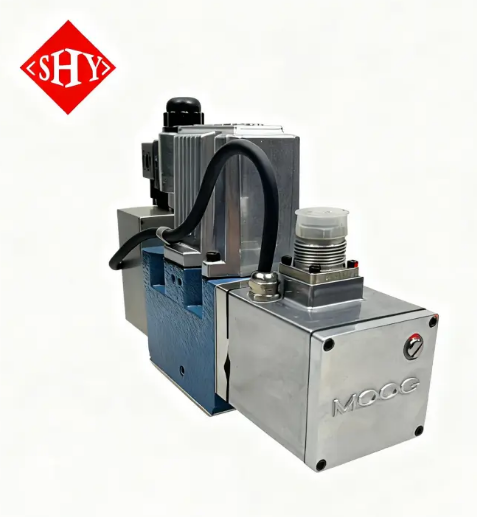
Ever wondered how pressure relief valves safeguard industries from catastrophic failures? These vital components ensure safety by maintaining optimal pressure levels. Pressure relief valves are crucial in various sectors, from chemical plants to oil refineries. In this post, you'll learn about their definition, importance, and applications, focusing on hydraulic pressure relief valves. Discover how high-quality valves from leading hydraulic valve manufacturers and suppliers enhance system reliability and efficiency.
Pressure relief valves have a fascinating history rooted in the need to control steam pressure safely. The earliest known design dates back to around 1679, credited to Denis Papin. He created a valve for his steam-powered "digester," using a weight on a lever arm to hold the valve closed. When steam pressure exceeded the weight's force, the valve would lift, releasing excess pressure. This simple design worked but had drawbacks: it required a lot of space, was easy to tamper with, and could open prematurely during movement or vibrations.
Later, engineers replaced the lever with direct-acting deadweight valves, placing weights directly on the valve. While this saved space, it often resulted in undersized valves that couldn't vent pressure fast enough, causing dangerous pressure spikes. The bouncing motion of early locomotives also caused premature valve openings.
Denis Papin's invention laid the foundation, but Timothy Hackworth made a significant leap around 1828. He introduced the direct-acting spring valve on his locomotive, the Royal George. Instead of weights, Hackworth used leaf springs arranged like an accordion to apply force on the valve. This allowed finer control over the valve’s opening pressure by adjusting the spring tension with nuts. Later, coil springs replaced leaf springs for better reliability and easier adjustment.
Hackworth’s spring valve was a game-changer. It was more compact, less prone to tampering, and responded more reliably to pressure changes. This design became the basis for most modern pressure relief valves, especially in steam-powered machinery.
Modern pressure relief valves have evolved far beyond their early ancestors. While the basic principle remains—releasing pressure when it exceeds a safe limit—today’s valves incorporate advanced materials, precise manufacturing, and improved designs for specific applications.
Some valves use diaphragms or pistons as sensing elements, improving sensitivity and response time. Others employ pilot-operated mechanisms for better control in high-pressure systems. Materials like stainless steel and specialized elastomers enhance corrosion resistance and durability, allowing valves to function safely in harsh environments, including chemical plants and nuclear reactors.
Digital monitoring and control systems now integrate with pressure relief valves, enabling real-time diagnostics and predictive maintenance. This evolution not only increases safety but also improves efficiency and system uptime.
Note: Early pressure relief valve designs, like those of Papin and Hackworth, highlight the importance of balancing mechanical simplicity with reliable safety—an ongoing challenge in valve technology development.
Pressure relief valves (PRVs) act as safety guards for pressurized systems. They stay closed under normal pressure, sealing the system tight. When pressure rises beyond a set limit, the valve opens just enough to release excess fluid or gas. This reduces pressure back to safe levels. Once pressure drops below the set point, the valve closes again, preventing further loss.
The valve’s opening is proportional to pressure increase. It starts to “crack” open at the set pressure and opens wider as pressure rises more. This gradual opening helps maintain system stability and avoids sudden pressure drops.
A typical pressure relief valve consists of three key parts:
Valve Element: Usually a spring-loaded poppet or disc. It seals tightly against the valve seat to stop flow. When pressure overcomes spring force, it lifts to allow fluid escape.
Sensing Element: Detects system pressure. Common types include diaphragms and pistons. Diaphragms are thin, flexible discs that respond quickly and with minimal friction. Pistons handle higher pressures but may be slower due to seal friction.
Reference Force Element: Most often a mechanical spring. It pushes the valve element closed. The spring tension sets the pressure at which the valve opens. Adjusting spring compression changes the valve’s set pressure.
These components work together to balance forces. Pressure pushes the valve open, spring force pushes it closed. When pressure exceeds spring force, the valve opens.
There are two main types of pressure relief valves based on how they open:
Direct-Acting Valves: Pressure acts directly against the valve element and spring. When pressure rises, it pushes the valve open against the spring force. These valves are simple, compact, and respond quickly. They suit lower-pressure or smaller flow applications.
Pilot-Operated Valves: Use a smaller pilot valve to control the main valve’s opening. The pilot senses system pressure and opens to relieve pressure, which then reduces pressure under the main valve’s piston or diaphragm. This allows the main valve to open smoothly and fully. Pilot-operated valves handle high pressures and large flows with better precision and less wear.
Pressure relief valves come in several types, each designed to meet specific needs and operating conditions. Understanding these types helps you choose the right valve for your system, ensuring safety and efficiency.
These are the most common type. They use a spring to hold a valve closed. When pressure rises above the set limit, the spring compresses, letting the valve open and release fluid or gas. These valves are simple, reliable, and cost-effective. However, their performance can be affected by backpressure—the pressure on the outlet side—which may cause the valve to open at different pressures than intended. Conventional valves work well in systems where backpressure is low or stable, such as pipelines or storage tanks.
Balanced bellows valves solve the backpressure problem. They include a sealed bellows that isolates the spring from outlet pressure changes. This keeps the valve's set pressure stable, even if backpressure varies. The bellows also protect internal parts from corrosive fluids or gases, making these valves ideal for harsh environments like chemical plants or refineries. They maintain accurate pressure relief and last longer in tough conditions.
Pilot-operated valves are more complex and precise. They use a small pilot valve to control the main valve. When system pressure reaches the set point, the pilot opens, reducing pressure on the main valve's piston or diaphragm. This causes the main valve to open fully and smoothly. These valves handle high pressures and large flow rates with excellent control. They are common in critical systems such as oil refineries, offshore rigs, and power plants where precise pressure management is essential.
These valves provide dual protection by responding to both pressure and temperature. They open if either pressure or temperature exceeds safe limits. This feature is vital in systems like water heaters, steam boilers, and solar heating where both factors can cause danger. By reacting to temperature changes as well as pressure, they prevent accidents caused by thermal expansion or overheating.
Tip: When selecting a pressure relief valve, consider your system’s pressure range, fluid type, and backpressure conditions to choose the valve type that ensures reliable and accurate protection.
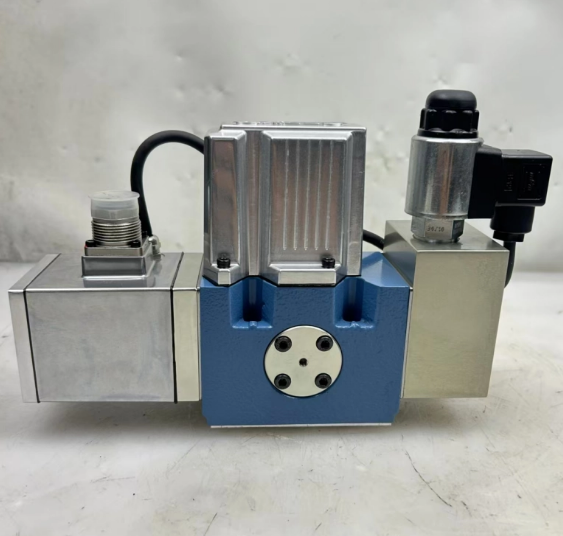
When choosing a pressure relief valve (PRV), several key factors must be considered to ensure the valve performs safely and efficiently in your system. Proper design and selection prevent failures, protect equipment, and maintain operational stability.
The relief pressure is the set point at which the valve opens to release excess pressure. Selecting a valve with the correct set pressure is crucial. Too low, and the valve may open unnecessarily, causing system inefficiency. Too high, and the system risks damage from overpressure.
Flow requirements are equally important. The valve must handle the maximum expected flow during pressure relief events. Undersized valves can’t release pressure fast enough, leading to dangerous spikes. Oversized valves may cause excessive fluid loss and system instability.
Consider how flow rates may vary during operation. Some systems experience sudden surges, requiring valves that respond quickly and can handle peak flows. Others have gradual pressure changes, where a valve with smooth modulation is preferred.
Materials must match the fluid type, temperature, and environmental conditions. The wetted parts—those in contact with the fluid—need to resist corrosion, erosion, and chemical attack.
Common body materials include:
Brass: Economical, suitable for general applications with non-corrosive fluids.
Stainless Steel (303, 304, 316): Offers excellent corrosion resistance, ideal for harsh or high-temperature environments.
Aluminum: Lightweight, used when weight matters more than corrosion resistance.
Plastic: Low cost, often for disposable or low-pressure applications.
Seal materials also matter. Buna-N is common, but alternatives like Fluorocarbon (FKM), EPDM, Silicone, and Perfluoroelastomer provide options for specific chemicals or temperature ranges.
Always verify compatibility between seal materials and fluids to avoid leaks or seal failure.
Space and weight can limit valve choices, especially in compact or mobile systems like aerospace or automotive hydraulics. Smaller valves save space but must still meet flow and pressure requirements.
Consider port sizes and thread types for compatibility with existing piping. Installation orientation matters; most valves require vertical mounting for proper function.
Weight affects system design, especially where vibration or dynamic loads occur. Lighter valves reduce strain on supports and improve response times.
Manufacturers often offer miniature or specialized valves for tight spaces. Consult experts to balance size, weight, and performance needs.
Proper installation ensures your pressure relief valve (PRV) works safely and reliably. Always mount the valve vertically, with the outlet pointing upward or as specified by the manufacturer. This orientation lets the valve open and close smoothly, avoiding pressure fluctuations or sticking.
Select an installation point where pressure peaks are likely, such as near pump discharges or pressure vessels. Ensure the inlet piping diameter is equal to or larger than the valve inlet to prevent flow restriction. The outlet piping should be larger than the valve outlet, allowing free discharge without backpressure buildup.
Support outlet piping to prevent strain or misalignment. Avoid sharp bends or restrictions near the valve, which can cause turbulence and reduce valve performance. Keep the valve accessible for regular inspection and maintenance.
Avoid overtightening connections; this can damage valve seats or seals, causing leaks. Use proper gaskets or sealing materials compatible with the fluid and temperature.
Regular maintenance keeps your PRV functioning properly and extends its life. Start by cleaning the valve’s seat and disc to remove debris or corrosion that can prevent tight sealing. Inspect the spring for signs of fatigue or corrosion; replace it if weakened.
Lubricate moving parts as recommended by the manufacturer to reduce wear and ensure smooth operation. Check seals and diaphragms for cracks or hardening caused by exposure to chemicals or temperature extremes; replace them if damaged.
Test the valve’s opening pressure periodically by applying controlled pressure. Confirm it opens at the set pressure and reseats properly as pressure drops. Testing frequency depends on your system’s operating conditions but should be at least annually.
If your valve leaks when closed, check for debris on the seat or a damaged seal. Clean or replace parts as needed. A sticking valve may result from corrosion or lack of lubrication; clean and lubricate the components.
If the valve opens too early or too late, recalibrate the spring tension or replace the spring if it has lost strength. Excessive vibration can cause premature opening; consider installing dampening supports or switching to a pilot-operated valve for better stability.
Backpressure on the outlet side can affect valve performance, causing it to open at incorrect pressures. Balanced bellows or pilot-operated valves can help mitigate this issue.
Tip: Always install pressure relief valves vertically and ensure inlet/outlet piping sizes match or exceed valve ports to maintain proper flow and reliable operation.
Pressure relief valves (PRVs) and safety valves both protect systems from dangerous overpressure, but they operate differently.
Pressure Relief Valves open gradually as pressure rises beyond a set point. They modulate the flow of fluid or gas to maintain stable pressure. This proportional opening helps keep system pressure balanced during normal operation.
Safety Valves open fully and quickly once pressure exceeds the set limit. They act as a last line of defense, rapidly venting excess pressure to prevent catastrophic failure.
Design-wise, PRVs use springs calibrated for smooth, controlled opening. Safety valves often have a "pop" action mechanism, snapping open fully to release pressure fast. PRVs are suitable for systems needing constant pressure regulation, while safety valves suit systems with sudden pressure spikes.
Safety valves are common in steam boilers, gas storage, and chemical plants where rapid pressure release is critical for human safety. They comply with strict standards like ASME Boiler and Pressure Vessel Code, emphasizing quick response and reliable shutoff.
PRVs find use in hydraulic systems, liquid pipelines, and fuel systems where maintaining steady pressure is vital. Regulations focus more on equipment protection than direct human safety, though compliance remains essential.
Choosing between the two depends on system needs, fluid type, and safety requirements. Many industries use both types together to cover different pressure scenarios.
Safety Valves close quickly after pressure drops below the set point, preventing pressure from falling too low. Their rapid "snap" action ensures the system pressure stays within safe limits without oscillations.
Pressure Relief Valves close gradually as pressure decreases. This slow closing avoids sudden pressure fluctuations, promoting system stability and smooth operation.
Response time also differs: safety valves act almost instantly during pressure surges, while PRVs respond proportionally, opening or closing in tune with pressure changes.
Pressure relief valves are critical for maintaining safe pressure levels in various systems. They work by opening when pressure exceeds a set limit, releasing excess fluid or gas. The technology has evolved significantly, incorporating advanced materials and designs for improved efficiency. Future advancements will likely focus on enhancing digital integration and material durability. For reliable and efficient pressure relief solutions, consider products from Xiamen Senhengyuan Machinery Equipment Co., Ltd., which offer innovative features and exceptional value.
A: A pressure relief valve is a safety device that releases excess pressure from a system to prevent damage, ensuring safe operation.
A: A hydraulic pressure relief valve opens when system pressure exceeds a set limit, releasing fluid to reduce pressure and protect components.
A: High-quality valves from a reputable China hydraulic valve supplier offer reliable performance, durability, and cost-effectiveness for various applications.
A: A hydraulic valve manufacturer provides expertise, customization options, and quality assurance, ensuring valves meet specific system requirements.
A: Troubleshoot by checking for debris, inspecting seals, lubricating moving parts, and recalibrating spring tension if the valve opens incorrectly.


