


Views: 0 Author: Site Editor Publish Time: 2026-03-04 Origin: Site


Process stability in modern manufacturing depends on more than machine design alone. Subtle variations in hydraulic performance can influence cycle time, product accuracy, and overall production efficiency. This is why companies evaluating the CP0 CP1 CP2 Hydraulic Pump series pay close attention to how pump behavior affects real operational outcomes. A CP1 hydraulic pump functions as the core energy provider within many industrial systems, particularly injection molding equipment where precision, repeatability, and stability define product quality. Understanding the key features and benefits of the CP1 pump helps manufacturers optimize performance, reduce variation, and maintain consistent production over extended operating cycles.
Hydraulic pumps supply the energy required for multiple motion stages within industrial machinery. In injection molding equipment, this includes clamping, injection, pressure holding, and ejection. Each stage relies on controlled hydraulic output to maintain accuracy and repeatability.
During clamping, the pump provides the force required to keep molds securely closed. Injection requires controlled flow to ensure material fills the mold at the correct speed. Holding pressure maintains dimensional stability while the material cools. Ejection requires smooth motion to remove finished parts without stress or deformation.
Because these stages occur repeatedly, consistent pump performance directly influences production quality and machine reliability.
Repeatability depends on consistent hydraulic output across cycles. Flow variation changes injection speed, which can affect material distribution. Pressure fluctuation alters holding force, influencing final dimensions. These variations can increase scrap rate and require frequent machine adjustment.
Stable pump performance supports consistent production results, reducing manual intervention and improving process confidence.
Efficiency in hydraulic pumps reflects how effectively mechanical energy converts into usable hydraulic output. Real efficiency must remain stable across different speeds, pressures, and temperature ranges.
Internal leakage reduces effective output and increases heat generation. Pumps designed with compensation mechanisms maintain stable clearances, reducing leakage variation when operating conditions change. This stability allows the pump to deliver predictable performance across a wider operating range.
Effective leakage control improves energy efficiency and supports consistent machine behavior.
Efficiency claims become meaningful when they reflect real production conditions rather than isolated test scenarios. Consistent machining accuracy and controlled assembly processes help ensure that performance remains stable after installation. Pumps that maintain efficiency over time reduce energy consumption and limit thermal stress.
Efficiency retention therefore contributes directly to long-term operational cost reduction.
Noise and pulsation are indicators of internal hydraulic behavior. They influence operator comfort, system stability, and component longevity.
Lower noise levels often indicate balanced internal forces and smooth fluid movement. Quiet operation supports better working environments while also reflecting stable pump behavior. Excessive noise may suggest cavitation, misalignment, or pressure instability.
Stable acoustic performance therefore contributes to reliability.
Pressure pulsation affects valve response and actuator smoothness. Reduced pulsation allows machines to perform precise movements with fewer vibrations. This improves product consistency and protects system components from unnecessary stress.
Low pulsation is especially valuable in precision manufacturing where motion accuracy is critical.
Durability describes how well a pump maintains performance over extended operation. Maintenance practicality determines how easily that performance can be preserved.
Strong sealing performance maintains efficiency by preventing internal leakage and contamination. Wear-resistant materials help preserve dimensional accuracy within the pump, supporting stable pressure delivery over time. Durable design reduces performance drift and extends service intervals.
Durability supports predictable production planning.
Gradual temperature increase, unexpected noise, or pressure instability often signal maintenance requirements. Monitoring these indicators allows operators to address issues early. Pumps designed for balanced thermal behavior typically require less frequent intervention and provide more predictable maintenance schedules.
Predictable maintenance supports operational continuity.
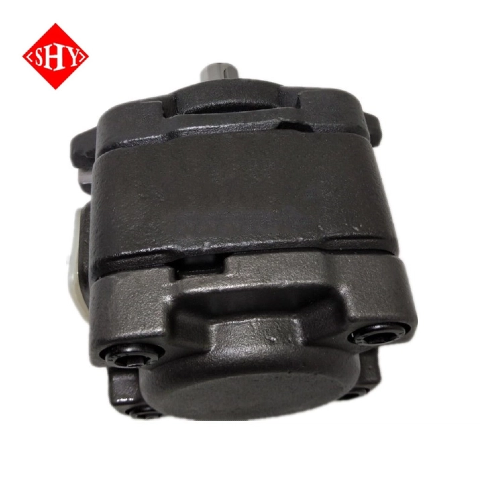
Accurate specification ensures that the pump supports machine requirements without unnecessary oversizing or performance limitations.
Displacement determines flow output and influences cycle speed. Selecting a displacement aligned with production requirements ensures efficient operation and avoids energy waste. Correct matching allows machines to maintain consistent cycle timing.
Proper displacement selection improves productivity and efficiency.
Rotation direction, port configuration, mounting style, and working pressure must match system design. Verifying these parameters before installation prevents delays and simplifies commissioning. Accurate specification supports smooth integration into existing equipment.
Specification alignment reduces installation risk.
Series | Typical positioning | What changes for the user | Best-fit scenarios | What to confirm |
CP0 | Basic stability | Standard efficiency | Conventional equipment | Pressure range |
CP1 | Balanced performance | Improved stability and efficiency | Injection molding, automation | Cycle requirements |
CP2 | Higher capacity | Enhanced durability and output | Heavy industrial systems | Load variation |
Understanding positioning allows users to select a pump that matches operational priorities rather than simply choosing a higher model.
Industrial users require pumps that maintain consistent performance across long operating periods. Stability, efficiency, and durability must remain predictable even as operating conditions change.
Controlled manufacturing processes ensure dimensional accuracy and stable internal behavior. Inspection procedures verify sealing integrity, pressure stability, and performance consistency before delivery. This approach supports predictable operation across multiple installations.
Consistency simplifies maintenance planning and replacement.
Application guidance assists with installation and commissioning. Technical support helps resolve performance questions quickly. Spare parts planning supports long-term maintenance strategies. Tailored configuration options allow pumps to align with specific system requirements.
Support capability enhances lifecycle value.
Hydraulic stability directly influences product quality in injection molding and other precision processes. Variations in pressure or flow can change material distribution, dimensional accuracy, and surface finish. Stable pump output therefore supports quality control.
Reducing variation improves production predictability and reduces scrap rate.
Energy consumption represents a major component of hydraulic system operating cost. Pumps that maintain efficiency across operating conditions reduce wasted energy and limit heat generation. Lower heat reduces cooling requirements and extends fluid life.
Efficient operation contributes to reduced maintenance frequency and improved overall cost control.
Reliability is defined by consistency rather than peak capability. Pumps designed for balanced operation maintain stable output across varying loads and temperatures. This stability supports predictable maintenance intervals and reduces unexpected downtime.
Long-term reliability improves operational planning.
Modern manufacturing environments prioritize automation, repeatability, and energy efficiency. Hydraulic pumps must support these priorities by delivering predictable output and stable response. CP1 pumps provide balanced performance that aligns with automated system requirements.
Stable hydraulic behavior improves coordination between mechanical and control systems.
Extended production cycles place continuous stress on hydraulic components. Pumps designed with balanced internal forces maintain efficiency and stability over long operating hours. Stable thermal behavior prevents performance drift and protects system components.
Operational stability supports continuous manufacturing.
Lifecycle value includes energy efficiency, maintenance requirements, reliability, and replacement consistency. Pumps that maintain performance across operating conditions provide greater long-term value than those optimized only for initial cost.
Stable lifecycle performance improves return on investment.
CP1 hydraulic pumps are selected when repeatability, efficiency, noise control, and durability must work together to support stable production. Their balanced design helps maintain consistent hydraulic output, improve product quality, and reduce maintenance frequency across demanding industrial environments. Organizations implementing a industrial hydraulic gear pump system benefit from predictable performance, improved efficiency, and reliable long-term operation.
Contact us to discuss your machine parameters, share your application requirements, and receive professional assistance selecting the most suitable hydraulic pump solution for your production system.
1. What makes CP1 suitable for injection molding machines?
It provides stable flow and pressure that support consistent clamping, injection, and holding performance.
2. Why is low pulsation important for production quality?
Low pulsation improves motion accuracy, reduces vibration, and supports consistent product dimensions.
3. How does CP1 help reduce maintenance frequency?
Balanced internal design and stable efficiency reduce wear, heat generation, and performance drift.
4. When should CP1 be chosen instead of CP0 or CP2?
CP1 is typically selected when balanced efficiency, stability, and noise control are required for continuous industrial operation.


