


Views: 0 Author: Site Editor Publish Time: 2026-03-11 Origin: Site


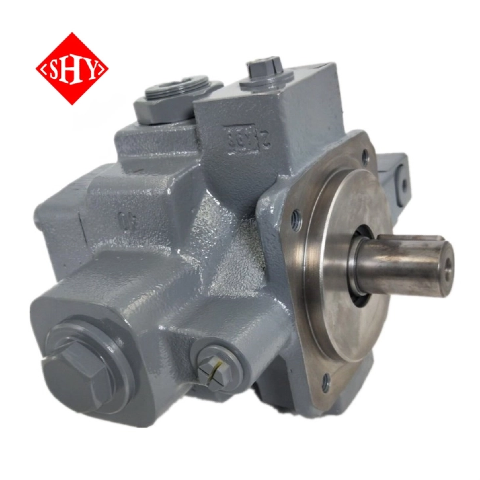
Hydraulic system decisions often begin with a simple question: should the system rely on a traditional gear pump or move toward a variable vane design. Machines performing repetitive single-load motion can operate effectively with gear pumps, yet applications with fluctuating demand frequently experience higher heat, inconsistent control, and increased energy consumption. This contrast explains why many engineers evaluating the 1PV2V4 V4 Series Hydraulic Pump compare it directly with standard gear pump solutions when planning upgrades or new equipment builds. Understanding the differences helps determine when simplicity is sufficient and when adaptive performance provides measurable benefits.
Standard gear pumps and variable vane pumps deliver hydraulic energy in fundamentally different ways. The distinction lies not in pressure capability alone but in how output behaves when system demand changes.
Gear pumps provide fixed output per rotation. Their design is straightforward, robust, and easy to maintain. Because output remains constant, system control relies on valves to manage excess flow. This simplicity makes gear pumps reliable for stable operating conditions where demand remains predictable.
Variable vane pumps adjust output automatically according to pressure and flow requirements. Instead of generating constant flow, displacement changes internally to match system demand. This adaptive behavior reduces energy waste, stabilizes temperature, and improves motion control across varying loads.
The difference becomes most noticeable in applications with dynamic duty cycles.
Performance differences influence operating cost, machine behavior, and maintenance planning. Production teams often observe these differences through temperature trends, acoustic behavior, and motion stability.
Fixed output means excess flow frequently passes through relief valves when demand decreases. This converts unused energy into heat. Elevated oil temperature accelerates fluid degradation and increases cooling requirements. Variable vane pumps reduce excess flow, limiting thermal buildup and extending oil life.
Temperature stability directly affects maintenance frequency and system reliability.
Gear pumps may produce increased noise when operating under load variation because pressure ripple changes as system demand shifts. Variable vane pumps maintain more stable internal balance, reducing pulsation and improving acoustic consistency.
Lower pulsation improves actuator smoothness and protects valves from vibration-related wear.
Control quality becomes increasingly important as machines perform multiple motion stages or operate under variable load.
Variable vane pumps maintain defined pressure levels without continuous relief valve operation. When load decreases, displacement adjusts automatically, preventing pressure spikes and stabilizing system behavior.
Stable pressure holding improves repeatability in precision processes.
Production equipment often requires different speeds during separate cycle stages. Gear pumps rely on external control methods that may introduce variation. Variable vane pumps adapt internally, supporting smoother transitions and consistent cycle timing.
Speed stability improves process predictability and reduces operator intervention.
Despite the advantages of variable technology, gear pumps remain effective in many scenarios. Understanding these scenarios prevents unnecessary complexity.
Machines performing repetitive motion with minimal load variation often operate efficiently with gear pumps. Simpler circuits reduce installation cost and maintenance complexity. In such environments, fixed displacement may provide sufficient performance.
Cost-sensitive equipment with predictable operating conditions can benefit from this simplicity.
Gear pumps are widely understood and easy to maintain. In applications where rapid serviceability is critical, simple mechanical design can be advantageous. Spare parts availability and straightforward replacement procedures contribute to operational continuity.
Ease of maintenance remains a valid selection factor.
Certain operating conditions reveal the limitations of fixed displacement designs and highlight the benefits of variable technology.
Continuous operation combined with varying load often leads to energy loss in gear pump systems. Frequent relief valve activity generates heat and increases wear. Variable vane pumps reduce this waste by matching output to demand.
Reduced energy loss improves efficiency and lowers operating cost.
Precision manufacturing often requires stable temperature and consistent motion. Variable displacement helps maintain these conditions by limiting excess flow and stabilizing pressure behavior. This results in improved product consistency and reduced scrap rate.
Temperature control becomes a major factor in long-term performance.
Symptom on your machine | Likely cause | Gear pump response | V4 series response | What to check next |
Oil runs hot | Excess flow relief | Continues generating heat | Reduces displacement | Duty cycle pattern |
Noisy start-up | Pressure ripple variation | Noise persists | Stabilizes internal balance | Inlet conditions |
Unstable actuator speed | Fixed output variation | Requires valve adjustment | Adaptive flow control | Speed requirements |
Pressure spikes | Relief valve cycling | Spikes remain | Maintains pressure stability | Working pressure |
Inconsistent cycle time | Load variation | External compensation needed | Internal adjustment | Cycle profile |
Frequent seal wear | Thermal stress | Wear continues | Lower temperature operation | Oil temperature trend |
This matrix provides a practical method for identifying when variable technology may improve system performance.
Transitioning between pump technologies requires understanding system behavior. SHY technical teams review cycle profiles, pressure and flow targets, operating temperature, fluid condition, and installation constraints before recommending a solution.
This analysis ensures that upgrading delivers measurable benefits rather than unnecessary complexity.
Manufacturing processes emphasize dimensional accuracy, pressure stability, and efficiency retention. Inspection procedures verify consistent performance across production batches, enabling replacement units to integrate smoothly into existing systems.
SHY provides a comprehensive hydraulic pump portfolio supporting automation, machine tools, construction equipment, plastics processing, and general industrial applications. Clear documentation and responsive technical support help customers implement appropriate solutions whether maintaining gear pump architecture or adopting variable vane technology.
Pump selection influences more than output capability. Thermal stability affects oil life. Pressure consistency influences product accuracy. Acoustic behavior affects operator comfort. These factors collectively define machine performance over time.
Adaptive pump technology contributes to smoother operation and improved energy efficiency, which supports long-term productivity.
Initial purchase cost represents only part of system investment. Energy consumption, maintenance frequency, downtime risk, and replacement consistency contribute significantly to total cost. Variable vane pumps often reduce lifecycle cost by limiting energy waste and stabilizing operating conditions.
Lifecycle value becomes particularly important in high-duty environments.
Modern hydraulic systems increasingly emphasize efficiency, automation, and predictive maintenance. Variable displacement technology aligns with these priorities by providing responsive output that supports advanced control strategies.
Integration between pump behavior and control logic improves system responsiveness and reduces reliance on compensating components.
Machines rarely operate under constant load. Variable vane pumps maintain stable performance across fluctuating demand, supporting predictable operation. Stable thermal behavior protects system components and reduces maintenance variability.
Reliability across changing conditions improves planning accuracy.
Selecting between gear and variable vane technology is not simply a technical decision but an operational strategy. Stable applications may benefit from gear pump simplicity, while dynamic environments often benefit from adaptive performance.
Understanding system behavior ensures that pump technology aligns with long-term production goals.
Gear pumps remain effective for simple and steady operation, while variable vane technology becomes valuable when systems experience changing demand and require improved efficiency and control. Organizations adopting the V4 series gain adaptive performance, reduced energy waste, and stable motion across dynamic applications. Implementing a variable hydraulic vane pump solution supports efficient operation, predictable maintenance, and improved long-term productivity.
Contact us to review your system parameters, discuss performance goals, and receive professional guidance on selecting the most suitable hydraulic pump for your application.
1. When should a gear pump be preferred over a V4 variable vane pump?
Gear pumps are suitable for stable load conditions where circuit simplicity and easy maintenance are priorities.
2. What is the main advantage of upgrading to the V4 series?
Adaptive displacement improves efficiency, reduces heat generation, and stabilizes pressure under variable load.
3. Does a variable vane pump always reduce energy consumption?
Energy savings are most noticeable in applications with fluctuating demand or high duty cycles.
4. How can I determine whether an upgrade is worthwhile?
Review cycle variation, temperature trends, energy consumption, and pressure stability to identify potential benefits.


